9N AI Materials is leading the evolution from digital to physical intelligence — embedding AI into the fabric of materials themselves. Our technology bridges computation and chemistry, creating systems that sense, learn, and adapt across robotics, biology, and architecture.
At 9N AI Materials, we’re redefining intelligence — bringing it out of servers and into matter itself. Artificial intelligence embedded in material.
Our graphene-based intelligent materials embed computation, memory, and learning directly into their atomic structure. Each layer of the iO1 architecture works as a neural and logical network, enabling surfaces, devices, and structures to sense, adapt, and self-learn without external processors.
While current AI like ChatGPT-5 requires over 51,000 GPUs, vast data centres, and megawatts of power, iO1 achieves comparable computational density on a film thinner than a human hair — roughly the size of two A4 sheets. This marks a radical shift from software-based AI to physical AI materials — a sustainable, decentralised form of intelligence that thinks where it exists.
From autonomous drones and robotic skins to self-healing cities and neural wearables, our technology bridges digital and physical intelligence — transforming the built world into an adaptive, energy-efficient, and intelligent ecosystem.
Limitless Applications: Smart cities to neural wearables and space technology.
Adaptive Robotics & Intelligent Mobility
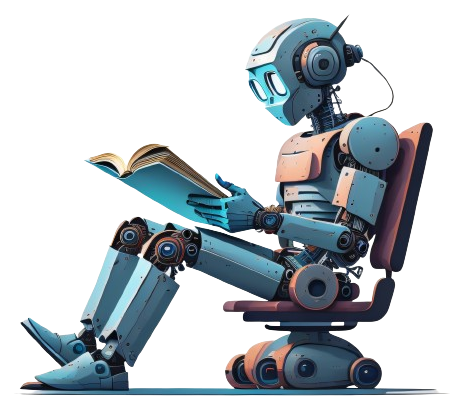
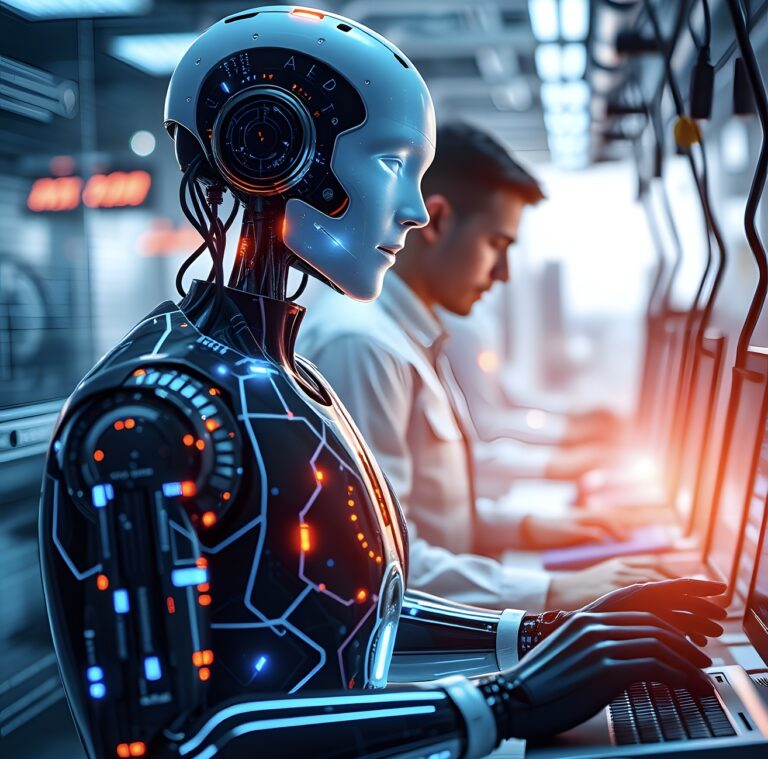
We combine AI and advanced materials to create robotic systems that move, sense, and compute as a single, integrated body. From humanoid robots to autonomous drones, intelligence is embedded into their structure — enabling awareness, agility, and true autonomy at the material level.
Our graphene-based AI materials form the foundation of intelligent physical systems — structures and surfaces that sense, learn, and adapt at the nanoscale. Embedded intelligence allows each layer to analyse its environment, optimise performance, and reconfigure itself for stability and efficiency. These materials exchange data seamlessly across networks, forming the backbone of a new generation of self-adaptive, “thinking” matter that brings computation into the fabric of materials themselves.
Our AI-integrated materials bring intelligence to infrastructure — enabling assets that sense, self-heal, and manage energy dynamically. From self-repairing roads and adaptive buildings to energy-harvesting surfaces, these materials help transform cities into responsive, self-optimising ecosystems that evolve with their surroundings.
Our AI materials redefine performance in extreme environments — from advanced energy harvesting to adaptive spacecraft surfaces. Designed for resilience, these systems self-regulate power, resist radiation, and maintain optimal functionality where conventional materials fail. By merging intelligence and energy at the material level, we’re enabling a new class of self-managing energy systems and next-generation exploration technologies.
Our AI materials interface seamlessly with biology — powering next-generation wearables, prosthetics, and neural interfaces that sense, process, and adapt in real time. These intelligent materials bridge human and machine, enabling responsive, energy-efficient systems that aim to integrate as naturally as living tissue.
We’re currently developing our flagship smart material platform — iO1.
Alongside this, we’re exploring a wide range of applications for AI-integrated smart materials, spanning space exploration, robotics, drones, agriculture, infrastructure, and everyday electronics. We envision a world where artificial intelligence is seamlessly embedded into the materials around us — from furniture and surfaces to the very fabric of our built environment.
At 9N AI Materials, we believe that in the near future, materials across every industry, market, and sector will be intelligent — powered by embedded artificial intelligence.
Robotic skin that can think — intelligent, adaptive, self-computing materials with integrated AI, enabling real-time sensing, learning, and response directly in the material.
AI-integrated materials monitor soil, moisture, and air in real time — optimising inputs, reducing waste, and enhancing resilient, sustainable agricultural productivity.